
Rapid-Response SEO for Law Firms: Miami Airport Crash
What rapid-response SEO for law firms is, how I wire it, and the limits no vendor can engineer away. Miami's runway overrun is the example.
Rapid-response SEO for law firms is a standing capability that detects a newsworthy event in your market, scores it against the case types your firm actually takes, produces a brief a lawyer can reject in ninety seconds, and publishes an approved page while the search demand is still forming. It is a shape of operation rather than a content type.
Here is the limit, stated before the sales pitch. Speed does not make you rank. It buys you the chance to earn a ranking, and only if the site underneath it was already worth something.
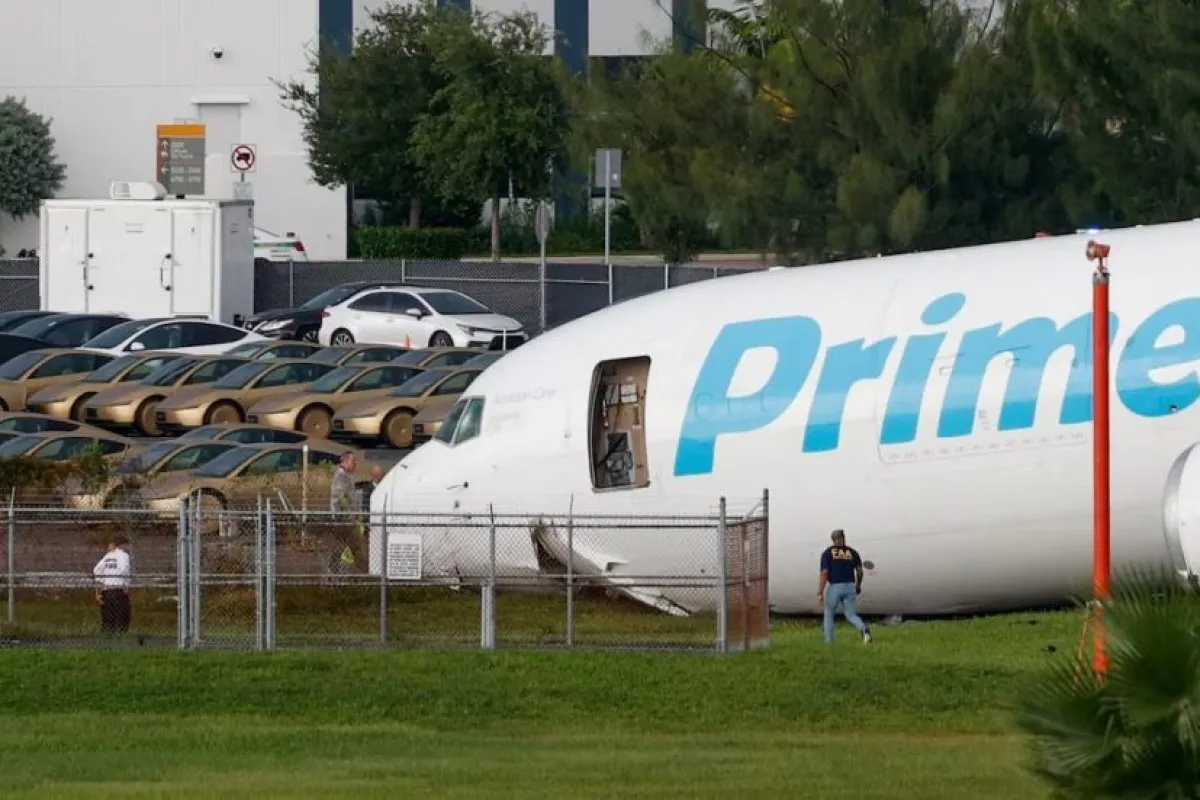
Now the event that makes the argument concrete. Sunday afternoon, a Boeing 767 freighter left the usable portion of Runway 30 at Miami International and did not stop until it had crossed a service road and caught fire. Five people are dead. By Sunday night, queries that were effectively dormant on Saturday were live, and somebody’s page was answering them.
So: did your marketing agency get you in front of the Miami airport crash? If you have to ask, you have your answer. The reason is architecture, not laziness.
I am not an attorney and nothing here is legal advice. I build the law firm marketing and automation infrastructure that sits between a breaking event and a firm’s website. Ordinary law firm SEO is scheduled around a monthly report and a quarterly review. This is built for the hour. Below is how I wire it. Where a human has to stand in the middle of it. What no vendor can honestly promise you.
What Rapid-Response SEO for Law Firms Actually Is
Take the crash out of it and the shape holds. The trigger changes. The mechanics do not. A refinery fire on the ship channel, a nursing home evacuation, a twelve-car pileup on a fogged interstate, a recall notice that lands at 4 p.m. on a Friday. Each one opens a query cluster that did not exist the day before and will be mostly settled inside two weeks.
Four things have to be true before the event rather than during it. Something is watching the streams around the clock. Your firm’s intake rules exist in writing. A lawyer can approve in minutes instead of business days. And a page can go live without a developer touching a ticket.
The firms that win these are not faster writers. They moved the approvals off the critical path.
What Actually Happened at MIA
21 Air Flight 7598, a Boeing 767-300 freighter flying for Amazon Air, departed San Juan and overran the runway on landing at Miami International around 2 p.m. on Sunday, September 6, 2026. It struck multiple vehicles and burned near a field on the west side of the airport. Five people were killed and five injured, three of them critically.
Tracking data showed the aircraft still moving near 130 mph as it departed the usable runway, and a review of tower audio found the pilots never declared an emergency before landing. The FAA issued a ground stop. The NTSB launched a go-team, which is what the agency does for an event of this size.
Here is the part that matters for a Miami injury practice, and it is not the aviation trivia. The aircraft plowed across a road used by warehouse workers and businesses ringing the airport. In the first hours, nobody outside the scene could say cleanly who was aboard and who was on the ground.
Those are not the same matter. A person struck in a vehicle on a public road and a person injured on the operational side of an airfield sit in different postures entirely, and no liability has been established for anyone. That ambiguity is the whole argument for why this work has to be attorney-led rather than automated end to end. A firm that reacts by publishing a generic “aviation accident attorney” page has answered a question nobody asked.
Why the Calendar Never Interrupts Itself
The retainer math explains this better than any confession would. An account manager carrying ten or twelve firms works from a content calendar built weeks in advance, because that is the only way ten or twelve firms fit inside one week. The calendar is a genuinely good instrument for consistency. It is the wrong instrument for a Sunday.
Look at what sits between the event and your homepage in that model: a strategist who is not on call, a writer in a queue, a review cycle measured in business days, a developer with a ticket backlog. Nothing in that chain is designed to interrupt itself. It was built so that nothing would.
That is the product you bought. I have written before about why most agency SEO is built for volume rather than depth, and this is the sharpest version of it. Volume models optimize for the predictable month. Your practice makes its money on the unpredictable Sunday.
Four Questions That Expose a Slow Agency
Do not ask what they published last month. Ask these, in this order, and listen for whether the answers involve logs or adjectives:
- Did anyone on my account know about this before I did?
- Is there anything live on my site right now that addresses it?
- What is the plan for roughly thirty days out, when the NTSB preliminary lands?
- What is my firm’s measured response time, in hours, on the last three events in my market?
If the answer to any of those arrives as a proposal or a scoping call, you do not have rapid-response SEO. You have a vendor with a queue, and you are in it behind eleven other firms.
The Window Is Narrow, and Speed Alone Buys You Nothing
Interest in an event like this is front-loaded and decays fast. “Miami airport accident lawyer” and the long tail underneath it were live Sunday night. By the time a request has moved through a calendar, a writer, a review cycle, and a developer’s ticket queue, those questions have been answered somewhere else.
Publishing Fast Is Not Ranking Fast
I flagged this limit in the first hundred words. Here is the mechanism behind it. Google ranks on relevance and quality against a site’s existing authority, and a thin page rushed out because a topic is hot is precisely what its spam policies call scaled content abuse, where the tell is the purpose of the page rather than the tooling that produced it. If your LocalSEO foundation is weak, an event page will not rescue it. It will just be a weak page about a plane crash.
What early publication actually buys is position. Links while journalists are still sourcing. Direct traffic from people looking for answers. A page with real history before the next wave arrives.
One Crash, Four News Cycles
And there will be waves. Plan for each:
- Week one: the event itself and the immediate surge
- Roughly thirty days: the NTSB preliminary report, factual only, no probable cause
- Twelve to twenty-four months: the final report, per the agency’s own investigative process
- In between: filings and whatever the docket produces
A page that has been live and accumulating signal since week one starts each of those from a better position than a page created the morning the report drops. Better position. Not a promise.
How I Wire the System, Detection to Retirement
Detection: Streams, Not Monday Mornings
Detection runs continuously, not on Monday morning. FAA and NTSB feeds, aviation tracking anomalies, ground stop notices, local newsroom monitoring, and rising query data from search APIs. An agent watches those streams and does nothing ninety-nine percent of the time, which is the correct behavior.
Triage: A Signal Is Not an Assignment
This is where most people get it wrong. Every candidate event gets scored: the geography the firm is licensed for, the fact pattern against case types the firm actually wants, the rough scale of claimants, and whether the matter carries an obvious conflict. A multi-defendant catastrophic event and a two-car collision on I-95 should not enter the same workflow, and if they do, you have built an alarm that nobody will listen to by March.
The Firm’s Rules, Written Down Once
Most of the delay in a rapid response is not the writing. It is somebody trying to remember what the firm’s position is.
So we write it down once, in machine-readable form. Which case types you take and which you decline. Which claims your firm will never make on a page, including anything that would fail the advertising rules your bar enforces. Who signs off, and who does not. That work is unglamorous and it is worth more than every tool in the stack.
Brief First, Page Second
The system produces a brief before it produces a page. The live query cluster. The named entities involved, NTSB and FAA and 21 Air and Amazon Air and Boeing. The jurisdiction. What the page must answer. What it must never claim.
An attorney can reject a brief in ninety seconds. Rejecting a finished page costs an hour and a small argument, which is exactly why review queues stall. Cheap rejection early is what makes fast publication possible later. Handing agents a narrow, scored, reviewable unit of work is the same discipline I described in the production orchestration patterns that actually ship.
Attorney Approval Is the Checkpoint, Not the Friction
I design toward a live page inside roughly ninety minutes of the event, with a lawyer having read it first. I am not going to quote you a record time I cannot hand you a log for, and you should not accept one from anybody else. Response time is measurable. Either there is a log, or there is a story.
The approval gate is not friction I failed to engineer out. It is the thing that makes the speed usable. I have made this argument about human oversight in agentic systems generally, and it applies with more force here than in most enterprise contexts, because the subject is five dead people and an investigation that has barely started.
Nobody Can Push You Into Google
Google’s Indexing API is limited to job postings and livestream pages. That is the documented scope. Anyone who tells you they can push a personal injury article straight into Google’s index is describing a product that does not exist.
IndexNow is real and worth wiring up, and it notifies Bing and Yandex among the participating engines. Google is not one of them. What actually gets an event page discovered is duller than any of that: correct schema, an updated sitemap, and internal links from pages on your site that already carry authority.
Then Plan Its Funeral
Event pages get consolidated or redirected once the cycle closes. Run this for two years with no retirement policy and you have quietly built four hundred thin pages that drag the whole domain down. The cleanup schedule goes into the plan on day one, before the first page is ever published.
The Next One Will Not Be a Plane
Aviation is the rare event that hands you the entity list. Most are messier. A building collapse, a contaminated water notice, a bus rollover on the turnpike, a hurricane whose claim denials do not surface until November. Detection is the layer that changes per practice area. Everything downstream of it, the scoring and the brief and the approval and the retirement date, is the same machine.
Monday
Traffic tells you there was activity. Signed cases tell you something happened. Response time tells you whether the marketing infrastructure between those two things is real or decorative.
If you want to know what your firm’s actual response time is today, that is a measurement, not a proposal. Write me at hi@carlosarias.com and I will tell you what I find, including if the answer is that your current setup is fine.

Marketing Engineer for law firms. I combine digital marketing, software, data, automation and AI to improve the whole system — from first click to signed case.
Continue reading

The Free Live Chat Software That Outperforms $500/mo Rivals
Five free live chat tools, tested against one requirements list in August 2026. What each free tier actually costs, and where Tawk.to is the wrong pick.

The Rise of Agentic Websites: Why Law Firm Sites Are Becoming Autonomous
The rise of agentic websites is turning law firm sites from static brochures into autonomous systems that research, publish, and convert. Here is how.

The Hard Truth About SEO Agencies: You're Just Another Invoice
25 years on both sides of the table — hiring agencies at $10K/mo and contracting for them. Why most agency SEO is built for volume, not depth, and the six questions that separate the pros from the posers.