
Missed LSA Calls Could Cost Your Law Firm Twice From Oct 1
Missed LSA calls become billable leads on October 1, 2026. Here is how to fix your intake path before Google starts invoicing the ones you never answered.

Starting October 1, 2026, Google will charge Local Services Ads advertisers for certain calls nobody answered. If a prospective client reaches your firm during your published business hours and stays on the line longer than 20 seconds, that call can be billed as a valid lead whether or not a human ever picked up, according to Google’s notice to advertisers. So missed LSA calls could cost your law firm twice: the lead walks to whoever ranked under you, and the fee still lands on your invoice.
That is the whole problem. The rest of this is how to stop paying for it.
I am not an attorney and none of this is legal advice. I build the marketing and intake infrastructure that sits behind the phone number, which is the part of this change most firms have not costed out yet.
What Google Actually Changed
Google emailed Local Services advertisers in late August 2026. Three pieces matter for a law firm.
- Missed calls during business hours will be charged as valid leads when the caller stays on the line more than 20 seconds, with some exceptions.
- Subsequent calls. If the first call does not qualify as a charged lead, later calls between your firm and that same person that meet the valid-lead criteria will be charged, per Google’s wording relayed by Search Engine Roundtable.
- A routing exception. If your phone setup requires the caller to press a key to reach a department, the 20-second timer does not start until they press it, and you are not charged if they never press one.
Google also said it is adding safeguards against robocalls and spam abuse alongside the change.
Read that routing exception again. It is the only lever in the announcement that operates before your phone even rings, which is exactly why it is going to get abused this fall.
Why Missed LSA Calls Now Cost Law Firms Twice
The first cost is the obvious one. Somebody with a live matter dialed a Google Screened attorney, got nothing, and dialed the next one. Google verifies active law licenses for every lawyer carrying that badge, which means your competitor in that second call is not a directory listing. They are a vetted firm with a working phone.
The second cost is the line item. You now fund the introduction you did not get.
Legal is an expensive place for that to happen. Industry benchmarks put legal LSA leads at roughly $195 to $250 each in early 2026, with personal injury sitting at the top of that band because more attorneys bid into it. That was the price of a conversation. Now it can be the price of a voicemail.
There is a third cost, and it is the one that compounds. Google’s own documentation on ad rankings states that responsiveness to customer inquiries is a ranking factor and that missed calls may negatively affect your responsiveness. A firm that misses calls after October 1 pays more and ranks lower for paying more. That is not additive. That is a spiral.
None of this is hypothetical in legal. Clio’s 2024 Legal Trends Report found that the share of firms answering an incoming call from a prospective client dropped from 56% in 2019 to 40% in 2024, and that 48% of firms were unreachable by phone entirely. Sixty percent of the market was already leaking. Now the leak has a meter on it.
Step 1: Make Your Published Hours Match Actual Human Coverage
The charge applies during business hours. Your hours are no longer a profile detail. They are a billing control, and you set them yourself under Profile & Budget, where Google lets you mark closed days and set multiple daily windows.
Two failure patterns show up, and they are opposites.
The first is the firm publishing wide-open availability to look responsive, with a voicemail box behind it from 6 p.m. onward. Every one of those evening calls is now a billable miss. The second is the firm publishing 9 to 5 while its answering service actually covers until 9 p.m., which quietly wastes coverage it already pays for.
There is a wrinkle worth knowing before you narrow your hours in a panic. Google’s dispute guidance says a lead will not be credited if it came in outside your business hours, so hours cut in both directions. If you want fewer hours without going dark, use ad scheduling rather than lying about when your office is open.
Step 2: Audit the First Twenty Seconds Yourself
Call Yourself Like a Stranger
Do this today, from your cell phone, on a weekday morning. Call your own main line as if you were a stranger with a car accident and a police report in your hand.
Now count. How many seconds of greeting before a menu. How many rings before a human. How long the hold music runs before anyone acknowledges you exist. A recorded greeting stacked on a two-level menu will eat most of twenty seconds on its own, before a single ring reaches a desk, which is how a firm ends up on the wrong side of the threshold by design rather than by accident. I have not measured that across a sample and I am not going to pretend I have. Time your own line. That number is the only one that governs your invoice.
So here is a rule of thumb. A rule of thumb, not a finding. Under twelve seconds of automation before a human voice, or no automation at all. Treat that as the standard the intake path gets built to. It leaves eight seconds of margin against Google’s twenty.
The Key-Press Exception Is Not a Hack
The internet is about to fill up with the wrong advice on this one. Google’s Local Services platform policies state plainly that you should not engage in behavior in an attempt to avoid paying for a lead, and a firm that builds a deliberate maze to stall the timer is gaming a platform it depends on. Set the policy aside and consider the caller anyway. Someone who just had the worst week of their year is not pressing 4 for personal injury.
Step 3: Build the Callback Loop Before You Build Anything Clever
The AI receptionist is the tempting first build. Wrong order. The callback loop is what recovers revenue, and it is boring plumbing.
Why the Callback Is Now the Asset
Harvard Business Review’s audit of 2,241 companies found that firms responding to a web lead within an hour were nearly seven times more likely to qualify that lead than firms that responded later. That study is from 2011, and expectations have only tightened since. Under the new LSA rules the math gets sharper, because the subsequent-call provision means the callback you place can itself become the charged lead. You have already paid for the miss. The callback is how you collect on what you bought.
The Plumbing, In Order
The build is not exotic. The phone system fires a missed-call event. That event opens a task in the CRM with an owner and a clock. An SMS goes out inside the first minute acknowledging the call by name of the firm, and a human dials back inside five. If nobody claims the task, it escalates to a partner’s phone rather than dying in a queue.
Five minutes is a target I picked, not a law of the universe. Set a number your staffing can actually hold, then hold it. A callback window your firm blows twice a week is worse than never having published one, because now the receptionist has learned the clock is decorative.
Where the Agent Belongs
An agentic layer belongs here, and it belongs on a leash. It can transcribe, classify the matter type, check the caller against your conflicts list, and draft the follow-up. It does not decide whether you take the case and it never says anything that sounds like accepting representation. That boundary is the entire subject of how I keep a human in the loop on production agents, and it matters more in a regulated practice than anywhere else I work.
Step 4: Dispute Inside Thirty Days
You get 30 days. After that, credit requests are not considered, and decisions are final. Google also stopped issuing credits for “job type not serviced” and “geo not serviced” leads, so two of the reasons your old agency used to file are gone. Put a name on a weekly review of charged leads. Monthly review lets a third of your disputable charges expire before anyone looks.
Step 5: Stop Reporting Cost Per Lead
Cost per lead was always a soft number. After October 1 it is close to meaningless, because your lead count now includes calls that reached nobody. A dashboard showing cheap leads and a shrinking signed-case count is a dashboard describing a failure in cheerful language.
Connect the LSA account to call tracking and push the outcome back into the CRM, so every charged lead carries a disposition. Then report four things: answer rate inside published hours, median seconds to first callback, qualified matters, and cost per signed matter.
That last number is the only one a managing partner should care about. If it moves the wrong way while lead volume looks fine, your intake is the bottleneck and no amount of bid tuning will fix it. This is the same argument I made about agencies that report activity instead of outcomes, and this change is going to expose a lot of those reports.
The Constraint I Will Not Pretend Away
None of this makes your phone ring more. It makes the calls you already paid for worth the price, which is a different and smaller promise than the one you will hear from vendors selling AI answering services this quarter.
You will still pay for calls that go nowhere. Wrong practice area. Someone shopping nine firms in one afternoon. Budget for that as a cost of the channel rather than treating each one as a failure. What you should refuse to accept is the systemic miss: the 6 p.m. call, the voicemail nobody returned until Thursday. Those are engineering problems, and engineering problems have owners.
The firms that handle this well will not be the ones with the biggest budgets. They will be the ones whose search, site, and intake are one system instead of three vendors pointing at each other. That is also why speed matters everywhere else in this work, including how fast a firm can publish when a case-generating event happens in its market.
If This Is Your Problem
Pull your LSA business hours. Then call your own main line and time it. If the gap between what you publish and what a caller actually experiences is more than a few seconds, you have your October 1 exposure in one number.
If you want a second set of eyes on the intake path behind your Local Services Ads, write me at hi@carlosarias.com. Information first. No deck.

Marketing Engineer for law firms. I combine digital marketing, software, data, automation and AI to improve the whole system — from first click to signed case.
Continue reading
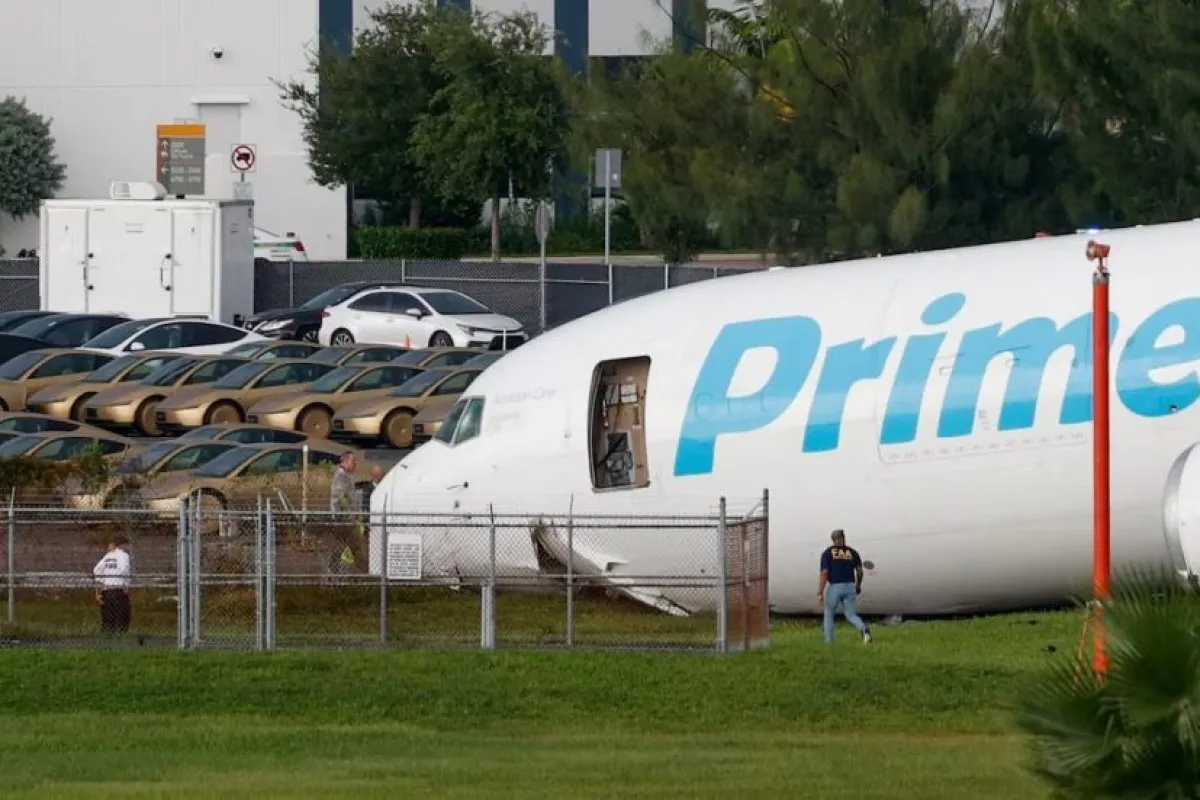
Rapid-Response SEO for Law Firms: Miami Airport Crash
What rapid-response SEO for law firms is, how I wire it, and the limits no vendor can engineer away. Miami's runway overrun is the example.

The Free Live Chat Software That Outperforms $500/mo Rivals
Five free live chat tools, tested against one requirements list in August 2026. What each free tier actually costs, and where Tawk.to is the wrong pick.

How to Create Search Demand for a Phrase Nobody Knows
Can you create search demand for a phrase nobody knows? Ranking is trivial. Demand takes off-search seeding, and here is the method, plus a dated live log.